Beyond Story: the Surprising Power of Argument
I’m always hearing about “the power of stories” and why stories are better than arguments. As a longtime fan of arguments, this advice has never sat well with me. Here’s a talk I gave about why.
Hat tip to my college rhetoric professor Daniel Coffeen, whose classes and writing were instrumental in shaping my thinking here (and elsewhere).
The steelman version goes something like this: People aren’t rational. If you want them to care, a logical argument isn’t enough. You can’t just bombard them with facts, you need to tell a story.
I agree that people aren’t rational. But the idea that you need a story to make your argument matter is based on a misunderstanding of what an argument really is.
Today I want to talk about why arguments are a better frame than story for connecting with your audience and making them care.
The advice about telling stories envisions argument and story almost as opposites. Stories are warm, human, emotional. Arguments are cold, hard logic. The argument might be the “truth” of the matter, but story is the spoonful of sugar that makes it go down.
But this is a limited view of what argument is.
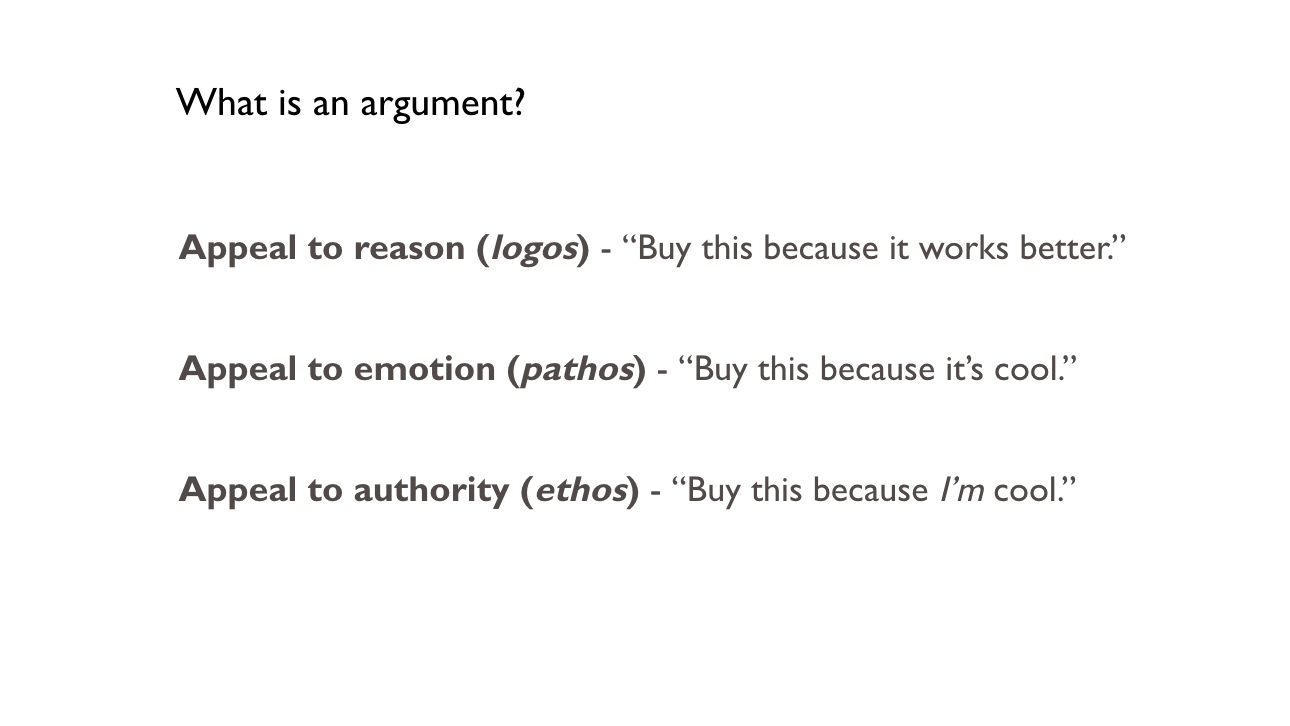
We know from Aristotle that arguments have three modes of appeal: ethos, pathos, and logos.
Some arguments lean more into one mode than another, but an argument that leans heavily on pathos or ethos is still an argument.
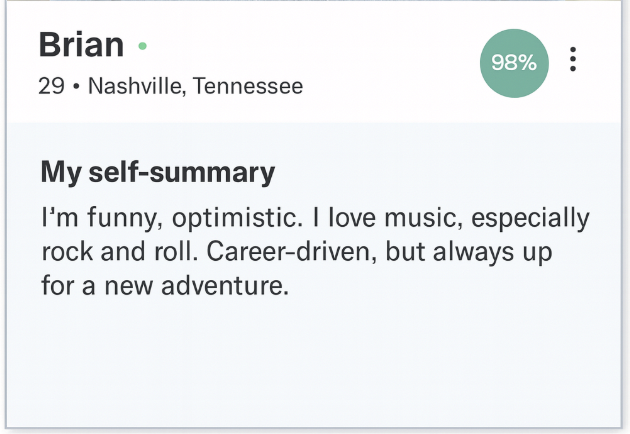
Let me show you what I mean. This is an online dating profile.
Wait, why aren’t you laughing? He said he was funny.
What this shows is something we know intuitively: The way to persuade someone that you’re funny isn’t to just say that you’re funny. It’s to do something funny.
This guy is still making an argument about what kind of person he is. It’s just not the one he intended to make.
So it’s really easy for someone to stand out in this environment by making a better argument.
The way to do that is to recognize that style is argument. The feel of your language, the emotion you convey, the character you inhabit: those aren’t just things you sprinkle on top.

Here’s another online dating profile. This one uses a very different strategy than the last one. The entire argument happens through style.
You could call this “show don’t tell” but that’s not quite right, because you can’t only tell. You’re always showing something.
And to bring this back to story: when we say ‘logic doesn’t convince people, you need a story’, what I think we really mean is: you didn’t construct an effective term of appeal. You didn’t think about ethos, pathos, or logos.
The way to fix that isn’t necessarily to tell a story. It’s to make a better argument.
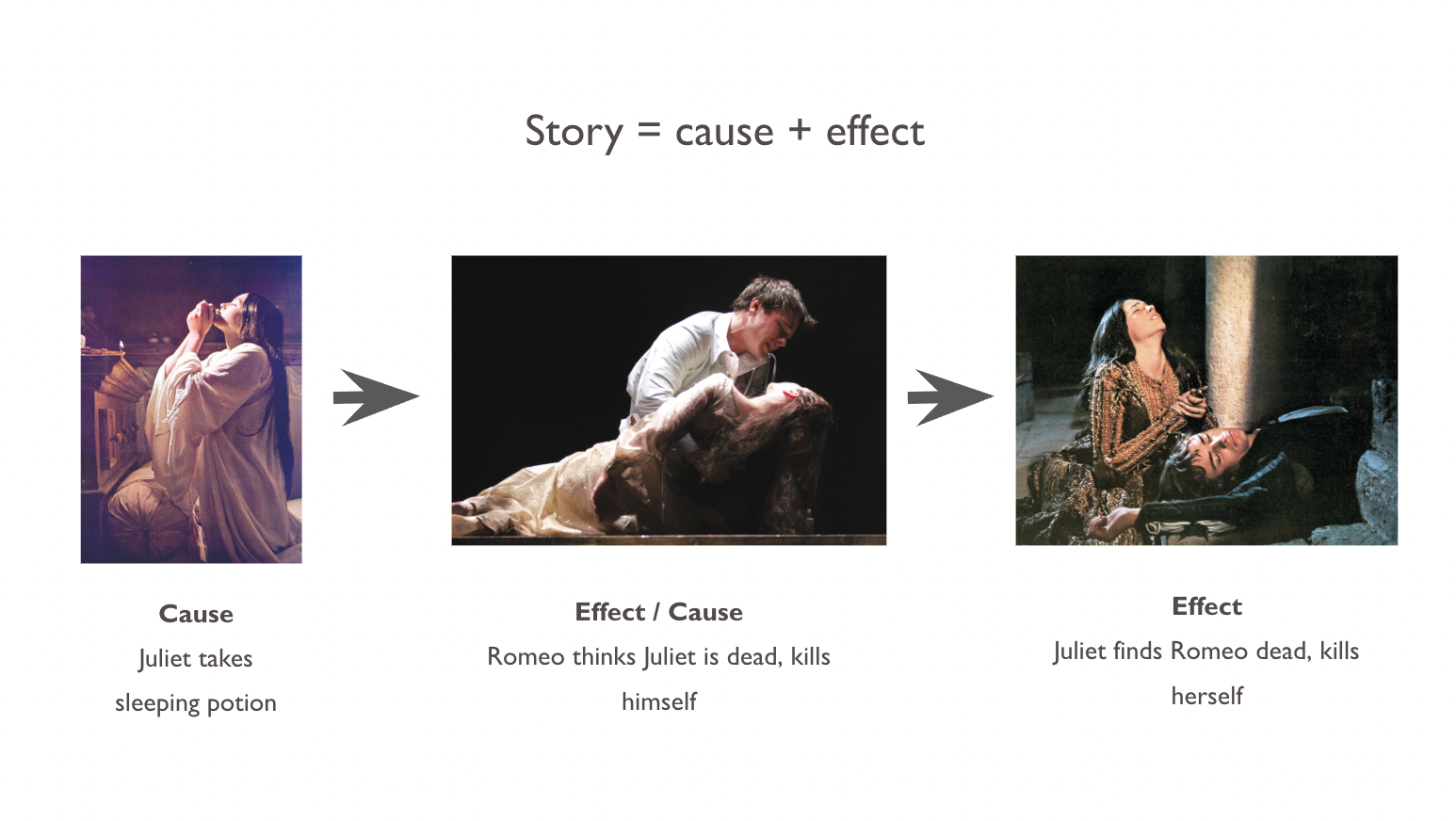
Stories are a type of argument. They’re a type of argument where ideas are linked by cause and effect AKA plot. Plot is the engine that moves you from one idea to the next.
But this isn’t the only way arguments can move between ideas. The secret isn’t a particular type of movement, but that there is movement at all. That that movement makes sense, and in the best case, that it feels both surprising and inevitable.
That’s what gives an argument its energy, what makes people care.
When you go into a situation thinking "what story should I tell," you're limiting yourself to one particular mode of expressing an argument. But there are lots of other argumentative forms that might work better for what you're trying to do—without boxing you in.
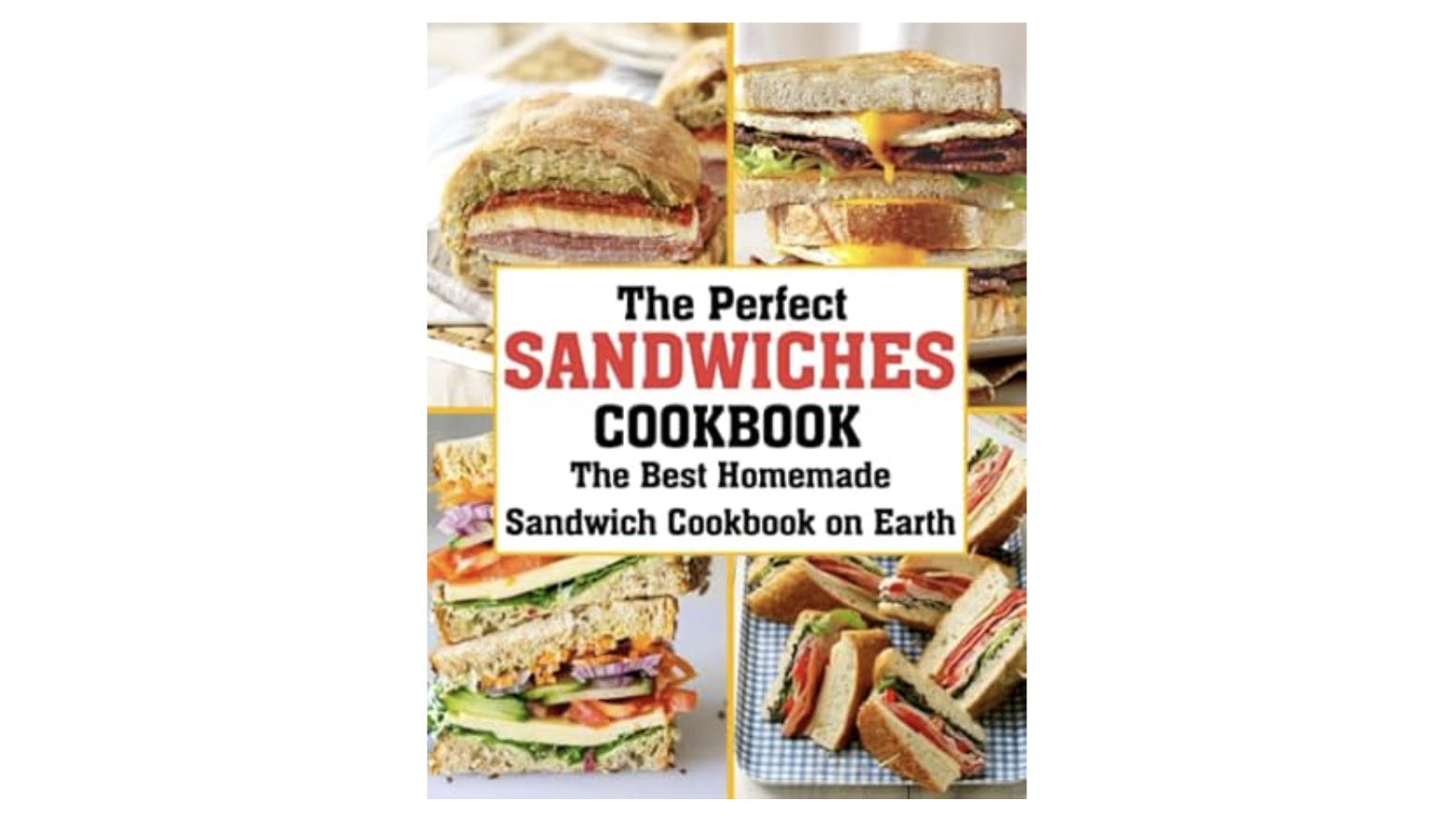
The advice about telling stories is like saying, “Oh, you want to learn how to cook? Let me tell you everything there is to know about making sandwiches.”
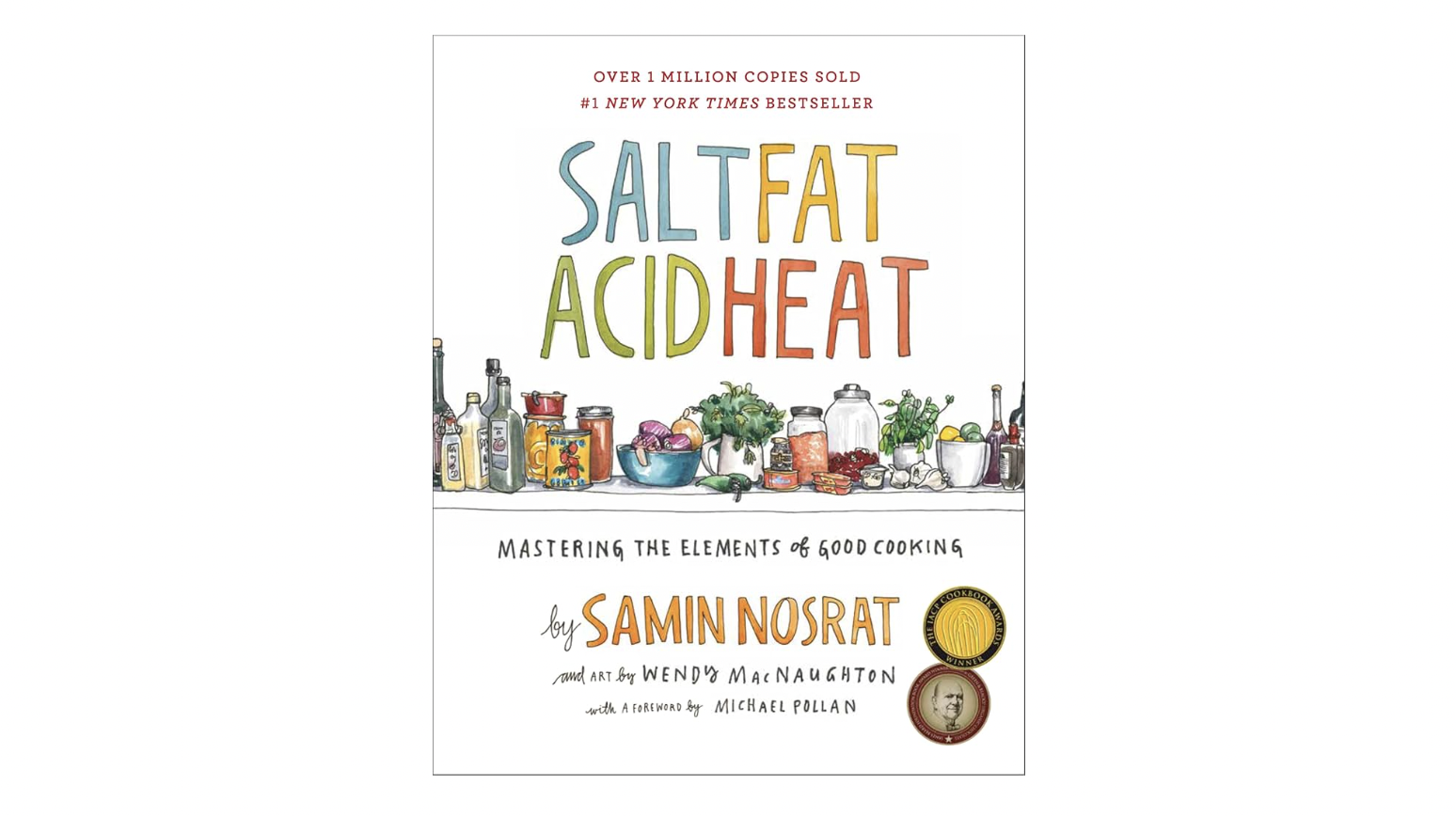
The advice about arguments is like saying, “Let me tell you about salt, fat, acid, and heat.” This doesn’t tell you what to make for dinner, but it tells you how to make anything you want … maybe even something that’s never existed before.
On top of this, stories have some specific limitations that arguments don’t have. People reach for stories because they’re familiar. They tend to follow known archetypes, like the hero’s journey or the underdog. This can be useful if you want to claim that you’re the underdog. But that means you’re fitting into an existing frame.
Arguments don’t have a frame. They’re the art of creating the frame. You can ask a totally different question than the one that appears to be in front of you. Arguments let you set your own terms.

One way to understand this better is to think about what you’re NOT doing when you make an argument. You’re not just listing things.
In the first online dating profile, not only did the guy not show that he was funny, his entire mode of appeal was to list out facts about himself: I’m funny. I’m optimistic. I love music.
This is the same move a lot of my clients make when they’re trying to explain what they do. They list their features and functions: we’re an adaptive AI powered solution AND AND we do real time monitoring AND we’re revolutionizing women’s health.
That’s not an argument, it’s a list. You can turn it into an argument by asserting a relationship between the things on the list.
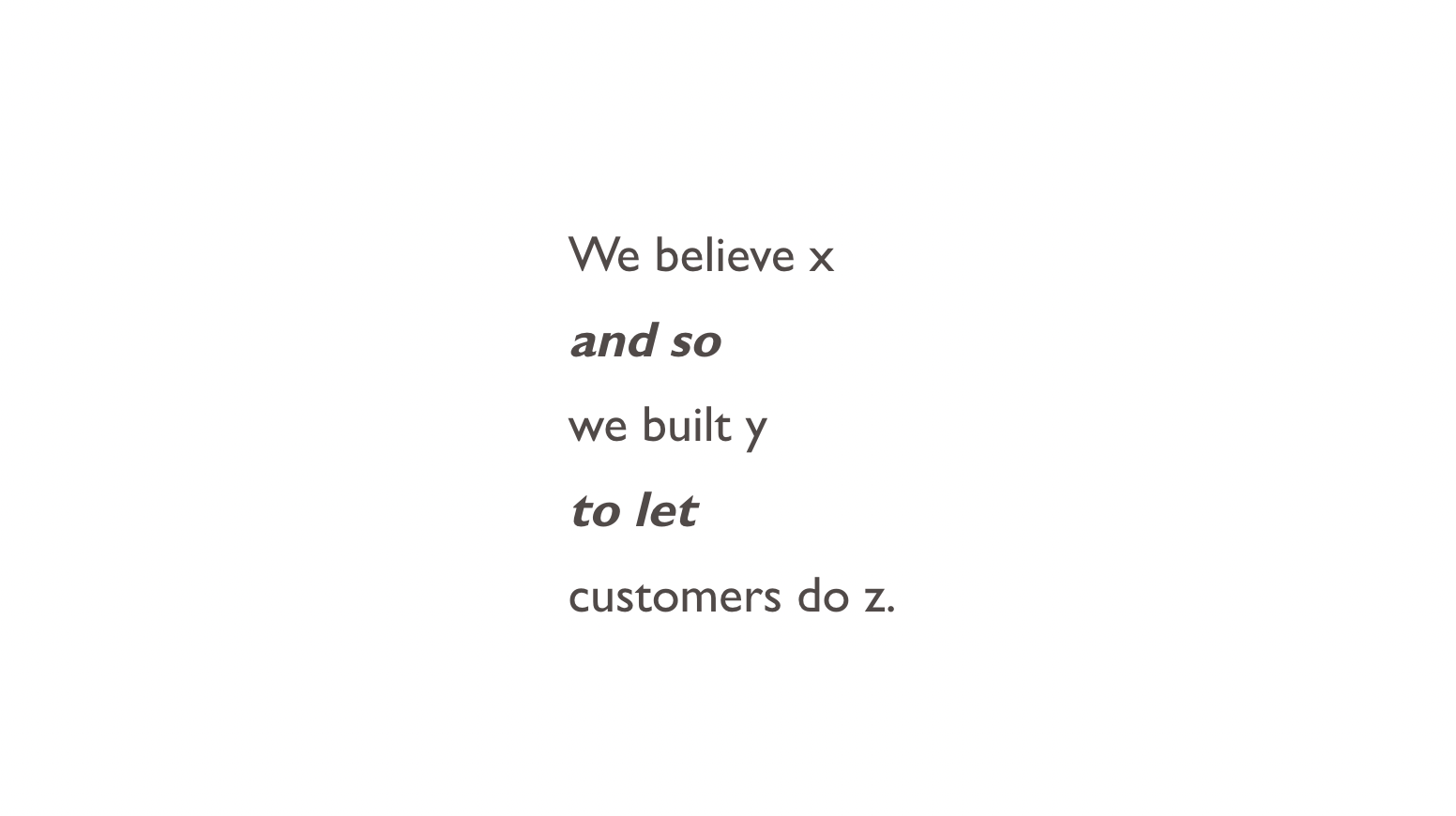
The key is that you’re not just presenting information. You’re combining the raw ingredients in a novel and perhaps surprising way. You might decide to lean more into logic, or authority, or emotion. But no matter how you frame it, the key is that you are framing it. That’s your contribution: the frame.
Want to see some examples of how to actually do this?

In the early 80s, IBM was by far the dominant personal computing company. No one had Apple. IBM’s advertising made a simple argument: “We’re faster, we’re cheaper, we’re reliable.” And they were.
That put Apple in a tough spot. They were more expensive and less strong on the merits than the competition. What argument could they possibly make?
Apple decided not to compete on features or product. Instead, they made an argument about who they were, about their character, about ethos.
Apple shifted the terms of the conversation completely away from what IBM was talking about, and in the process, made fools of IMB. Apple is saying, “We’re the cool kids. Buy Apple and you, too, can be a rebel and a free thinker.”
They’re not opposing IBM. That would be operating within IBM’s framing. They taking the conversation in a completely different direction. That’s what arguments let you do.

I know a guy who helps startups improve their pitch decks. His company is called Hate Your Deck—which makes a compact but complex argument.
Consultants are often in a situation with a potential client where we want to say something like: “You should hire me because I’m good at the very thing you suck at.” But of course, we can’t say that. And so we’ll often speak sideways a little, try to couch it in some way.
Hate Your Deck just owns it, stepping right into the role of judge. That’s an appeal to authority.
But that’s not the only thing it does, because it’s clearly not fully serious. The title is so direct, so socially inappropriate, that we know it’s not to be taken at face value. It’s funny—an appeal to our emotions.
And it does another thing on top of this, which is filter for the right kind of clients. You can hear it as a question: “Hate your deck? You’ve come to the right place.” This is a logical appeal to someone who knows that their deck sucks and is relieved at the opportunity to work with someone who talks about that frankly.
In three words, Hate Your Deck says different things at the same time. Arguments let you speak in multiple registers. The modes of appeal can be in tension, and the meaning emerges from that tension.
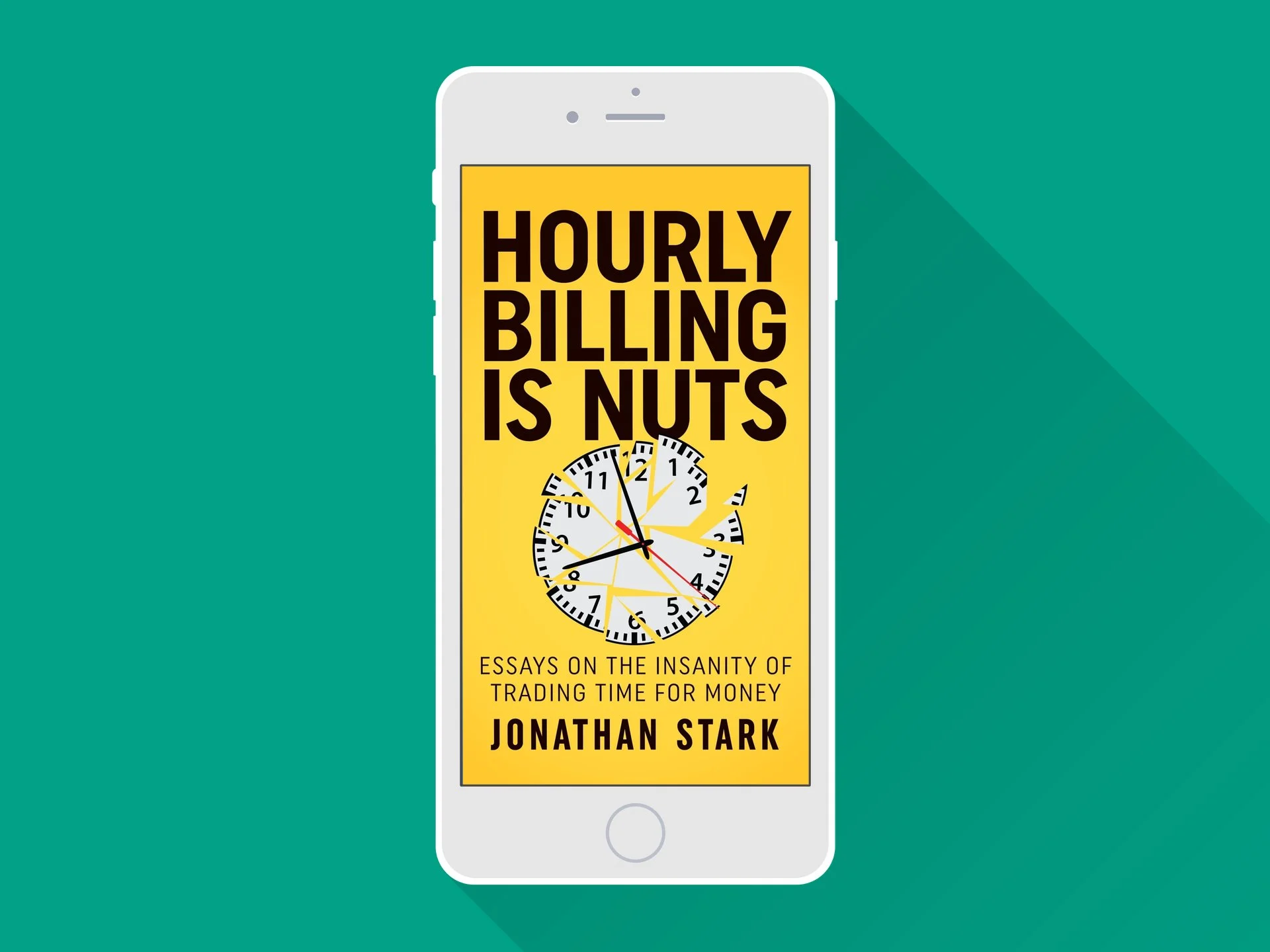
Jonathan Stark helps consultants price their services based on value, not hourly rate.
But what he’s really doing is teaching people how the way you set your prices is itself an argument.
Charging by the hour argues that you’re a commodity. Value pricing argues that you’re an expert. This is an appeal to authority. Pricing, here, is how you present your character.
Stark has tons of suggestions for how to actually do this. But one of my favorites is when a potential client asks your hourly rate, Stark advises that you simply say, “I don’t have one.” Then stop talking. Let there be silence. Let them react.
Silence is an instrumental part of your argument. You say something unexpected, and resist the temptation to qualify it or soften it. That communicates confidence in your position. It’s an appeal to authority.

My last example is about panhandling.
I went to UC Berkeley for college, and multiple times a day I would walk along Telegraph Ave. If you want to make an impression on your audience, it’s hard to think of a more competitive environment: it’s teeming with homeless people and addicts and Greenpeace activists and all kinds of weirdos.
I did my best to ignore all of this—I was just trying to get to class! But there was one person I encountered who I will never forget. As I passed him, he said to me, “Can you spare any sorries?”
“Sorry!” I said quickly, before I’d realizing the trap I’d walked into. He looked at me with a giant grin and said, “Thanks!”
Why did he stand out to me? He didn’t do it by telling a more powerful story than everyone else. I actually don’t think anyone is a better student of the advice to tell stories than the street people of Telegraph Ave.
But you don’t believe those stories, because you hear them so often.
This guy made an appeal to emotion that didn’t have anything to do with story.
He turned the tables on me in this very sly way. I was used to being the one with the power, I got to ignore or say no from a comfortable distance. But he reversed this dynamic. He used a different argumentative strategy, and in doing so, he made an impression on me that no story could.
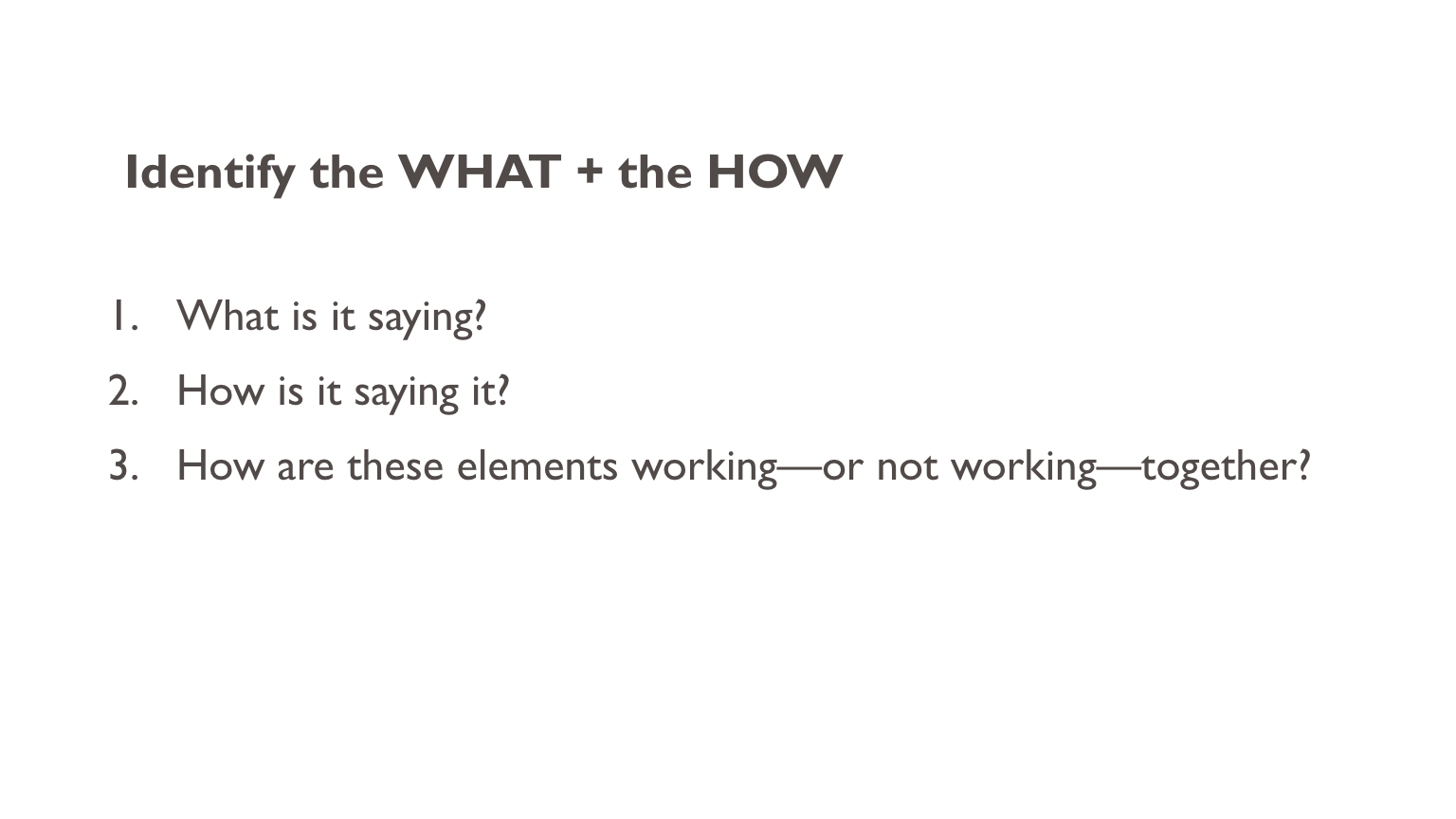
Part of what I’m saying here is that unlike stories, arguments don’t have to follow known structures or templates. They might take the form of a story, but they also might take the form of silence, or a question, or something else. That’s a good thing, that’s part of the power of arguments. But it means there’s no playbook to learn. So how do you get better? Here are some ideas.
When you encounter a piece of communications in the wild—a name, a presentation, a LinkedIn post, anything!—practice asking these three questions.
Arguments live in the relationship between the what and the how.
This doesn’t necessarily mean that the “how” needs to echo the “what”. It might even seem at first glance to undercut or contradict it, as in the Hate Your Deck example. But the question to ask is: is this deliberate? Is it serving your ends? Aim for Hate Your Deck, not the online dating profile that proclaims “I’m funny.”
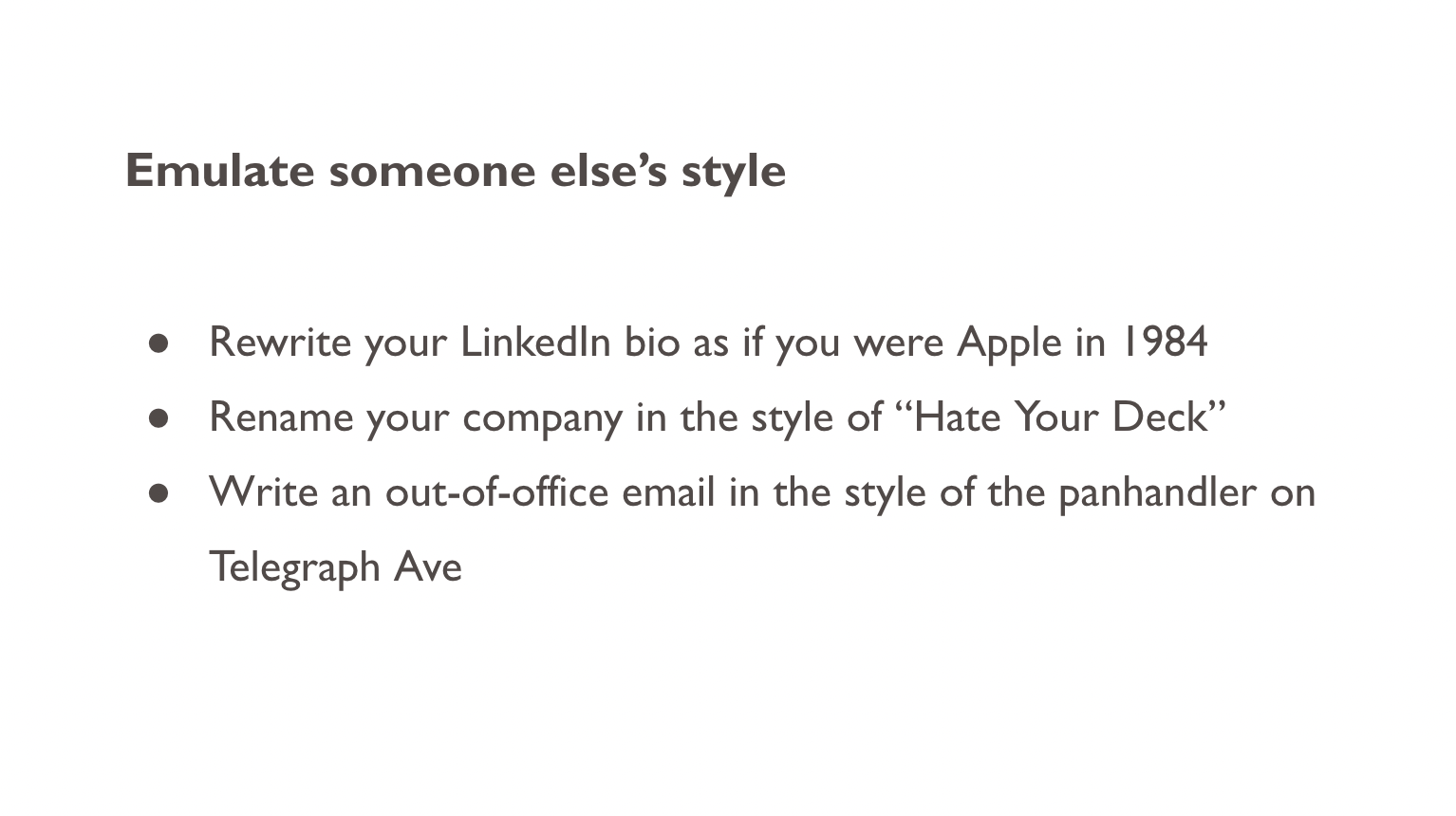
The second idea is to emulate someone else’s style. This is one of the best ways to expand your argumentative repertoire. When you see an argument that you like, try rewriting one of your own pieces in that style. And then think about how it changes the meaning.
The idea isn’t to publish it, but to get a more visceral feel for how form and style immediately shift meaning.
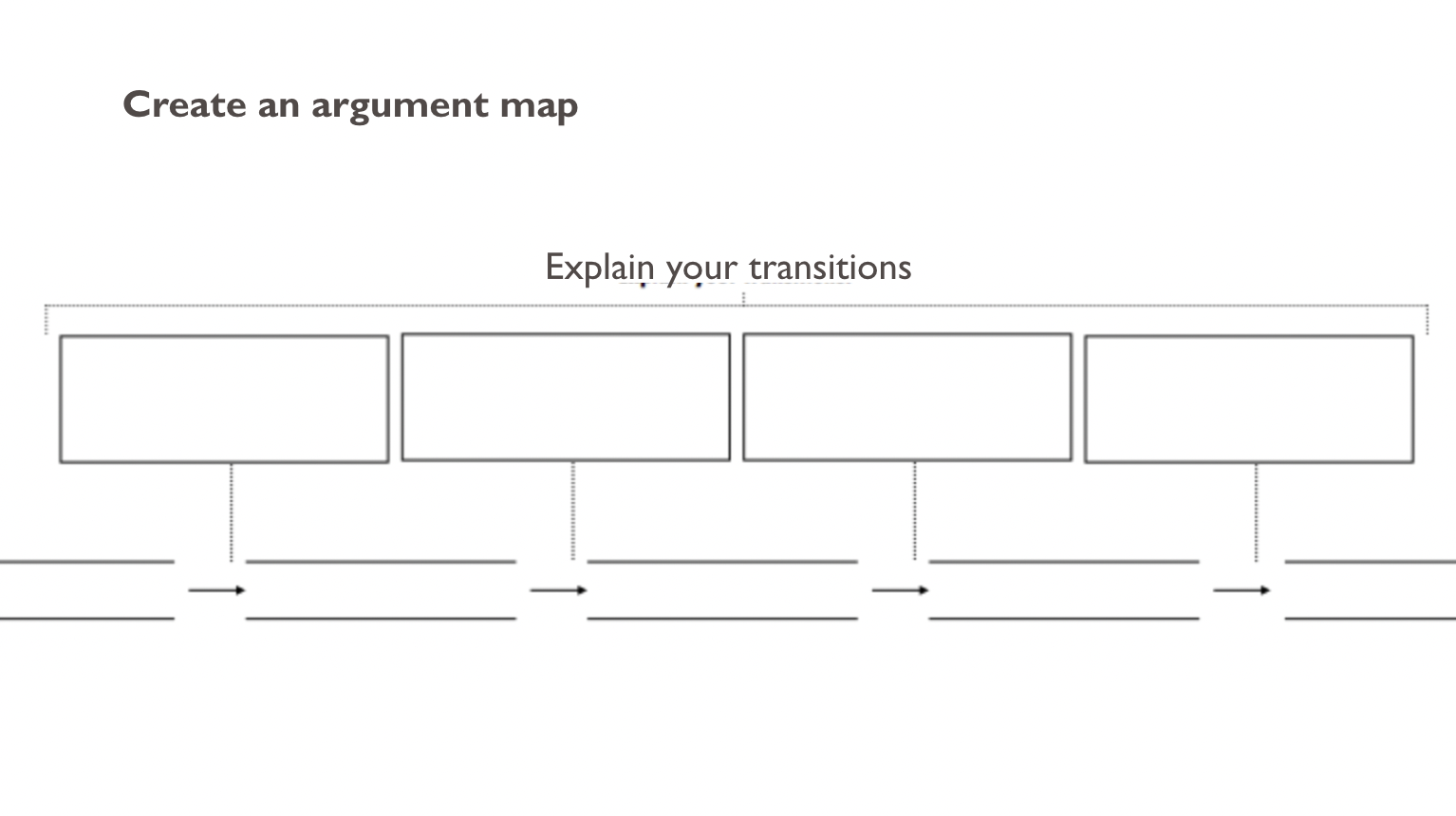
This last one is something called an argument map, and it’s kind of a trick both for sharpening your argument, and making it easier to write.
The next time you sit down to write something, instead of an outline, try this.
Write 3-5 main ideas you want to convey
Arrange them into sentences that move cleanly from point 1 to point 2 etc. You may need to do a lot of rearranging and maybe even swap out an idea that’s not fitting. This is the hard part.
The easy part is when you go to actually write the thing.
I’ve been telling you all about the power of arguments and why they’re so great. I hope I’ve made a compelling argument.
But I want to leave you with one more reason to care about arguments. They don’t just make you more effective. They also make the work you do more enjoyable.
When you're coming up with an argument, you can never know in advance what it’s going to be. There's no template. The whole work of an argument is making sense of this particular situation. You’re not applying a framework you brought with you, you’re inventing a logic that emerges from encountering something new.
Which means you can never really master arguments. You can’t be an expert. Becoming an expert is about accumulating knowledge and experience in a given domain. But when you’re coming up with an argument, expertise doesn’t really help you. Expertise helps you know the answer, but arguments are what you need when there isn’t one clear answer. Arguments start where answers end.
For me, that means coming up with arguments is always at least a little uncomfortable, because I can’t rely on my expertise. But it's also thrilling. Arguments make me feel more alive to my work. I hope you discover that they do the same for you.
